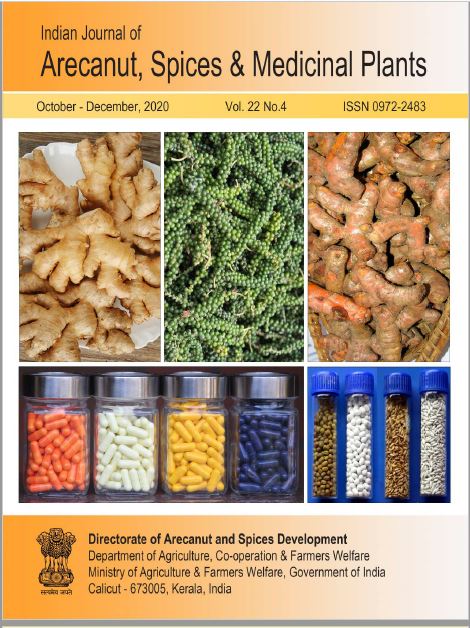
Directorate of Arecanut and Spices Development (DASD)

Author name: web

Whats new Hi

Second Advance Estimates for 2025-26

Spices As per the Second Advance Estimates for 2025-26, the production of spices has been estimated at 126.55 lakh tonnes from an estimated area of 50.00 lakh hectares, as against 129.93 lakh tonnes from an area of 50.93 lakh hectares reported in the Final Estimates for 2024-25. Thus, the area under spices registered a decline of 1.8%, while production declined by 2.6% compared to the previous year. The decline in the area and production of spices is mainly attributable to reductions in the area and production of four major spices, namely Dry Chillies (-21%), Fennel (-18%), Cumin (-5%),Ginger (-3%), and Black Pepper (-10%). The decline in chilli production is primarily due to a significant reduction in both area and production in Andhra Pradesh and Telangana, the two largest chilli-producing states in the country. This was mainly caused by excess rainfall during the sowing period, followed by the incidence of pests such as thrips and diseases including leaf curl virus. Fennel production declined mainly due to a reduction in the area under cultivation in Gujarat, driven by low prevailing market prices. As a result, many farmers shifted to alternative crops offering better returns. Cumin production declined due to decrease in area under cumin, especially in the State of Gujarat. This decline in area was mainly due to prevailing low prices for cumin. Ginger production was adversely affected by fungal diseases in major producing states, particularly Karnataka, Maharashtra, and Madhya Pradesh. Black pepper production declined mainly due to adverse climatic conditions during the flowering season, especially in Kerala and certain districts of Karnataka. Arecanut As per second advance estimates, the area under arecanut has been increased to 11.06 lakh ha in 2025-26 from 10.40 lakh ha in 2024-25. Which is possibly due to the highprices of arecanut prevailed. The production has increased to 15.29 lakh tonnes from 14.91 lakh tonnes due to favourable weather conditions and less incidence of pests and diseases, especially in the State of Karnataka. As per the Second Advance Estimates, the area under arecanut cultivation increased from 10.40 lakh ha in 2024-25 to 11.06 lakh ha in 2025-26, possibly due to the prevailing high market prices of arecanut, which encouraged expansion in cultivation. Production also increased from 14.91 lakh tonnes to 15.29 lakh tonnes, mainly owing to favourable weather conditions and lower incidence of pests and diseases, particularly in Karnataka. Consolidated statement of second advance estimates of area, production and productivity of spices Download Spices Areca Betel 2025-26 Second Advance consolidated  
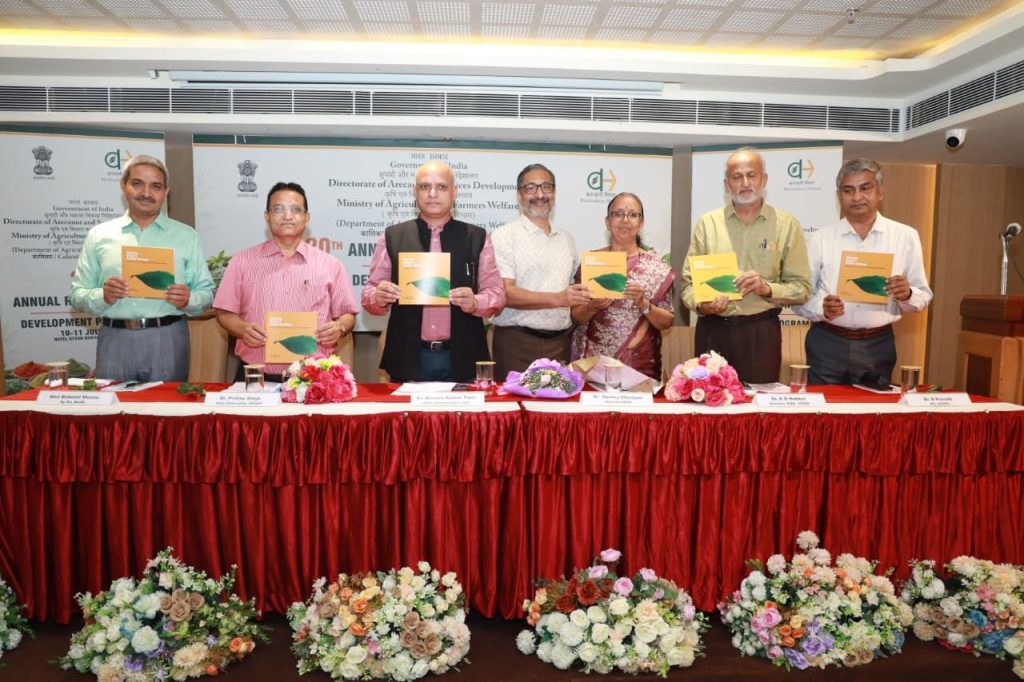
20th Annual Review Meeting on Development Programmes by DASD Held at Kozhikode, Kerala
News & Events HI

20th Annual Review Meeting on Development Programmes by DASD Held at Kozhikode, Kerala

The 20th Annual Review Meeting of the Development Programmes on Spices and Arecanut, implemented by the Directorate of Arecanut and Spices Development (DASD), was held on 10 to 11 July 2026 at Hotel Hyson Heritage, Kozhikode, Kerala. The meeting was inaugurated by Dr. Naveen Kumar Patle, Additional Commissioner (Horticulture), Government of India. Dr. Pratap Singh, Vice Chancellor, MaharanaPratap University of Agriculture & Technology, Udaipur, delivered the Special Address. Felicitations were offered by Dr. K.B. Hebbar, Director, ICAR–Central Plantation Crops Research Institute (CPCRI), Kasaragod, and Dr. D. Prasath, Project Coordinator, All India Coordinated Research Project (AICRP) on Spices. Dr. Homey Cheriyan, Director, Directorate of Arecanut and Spices Development, welcomed the gathering. The two-day meeting brought together around 70 representatives from 45 implementing agencies, including State Agricultural Universities (SAUs) and ICAR Institutes from across the country. The progress of various development programmes being implemented in the spices and arecanut by implementing agencies were reviewed in the meeting and deliberated on strategies for improving their effectiveness. The meeting also featured presentations by the participating, showcasing their achievements, best practices, and innovative approaches in the implementation of these programmes. A coffee table book on Alleppey Finger Turmeric (AFT) and Cochin Ginger (CG) was released during the meeting. The review meeting served as an effective platform for knowledge sharing, exchange of experiences, and fostering collaboration among implementing agencies, research institutions, and other stakeholders for the sustainable development of the spices and arecanut sector in the country.

Whats new Hi

मसालों का दूसरा अग्रिम अनुमान 2024-25

As per the second advance estimates for 2024-25, the production of spices has been pegged at 123.70 lakh tonnes from an estimated area of 46.83 lakh ha against the production of 124.84 lakh tonnes from an area of 50.24 lakh ha in 2023-24. In 2024-25, both area and production of spices registered a decline of 6.8% and 0.9% respectively, when compared with 2023-24 final estimates. A decrease in area and production of spices recorded in 2024-25 was mainly attributed to the substantial decrease in area and production of the following major spices. Crops 2023-24 (Final) 2024-25 (Second Advance) % difference Area     (‘000 ha) Production (‘000 tonnes) Area     (‘000 ha) Production (‘000 tonnes) Area Production Black Pepper 312.902 126.038 253.858 78.817 -18.9 -37.5 Possible Reason Pepper production has decreased primarily due to the dry spell during the flowering season, followed by a period of heavy and incessant rainfall. The same was observed in the pepper survey conducted by DASD during Oct 2024 in the major pepper growing states. Red Chillies 965.612 2909.844 895.119 2678.905 -7.3 -7.9 Possible Reason Chilli crop in AP was severely affected by the heavy rain during the month of August  /September, leading to a subsequent decline in production. Cumin 1302.333 894.565 1145.113 773.732 -12.1 -13.5 Possible Reason Due to bumper production in 2023-24, prices have declined and hence the area under cumin cultivation has decreased. Fennel 216.019 376.049 87.418 154.163 -59.5 -59.0 Possible Reason Due to unprecedented increase in production in 2023-24, prices have declined, resulting in a decline in area under fennel. Cardamoms 83.062 35.091 83.262 30.566 0.2 -12.9 Possible Reason The decline in production was mainly due to the severe dry spell during the months of April and May 2024 However, the following spices have registered markable increase in area and production. Crops 2023-24 (Final) 2024-25 (Second Advance) % difference Area     (‘000 ha) Production (‘000 tonnes) Area     (‘000 ha) Production (‘000 tonnes) Area Production Ginger 194.243 2333.000 225.628 2542.173 16.2 9.0 Possible Reason Due to the high prices that prevailed in 2023–24, the area under ginger cultivation has increased, leading to a corresponding rise in production Turmeric 292.830 1063.224 317.567 1203.621 8.4 13.2 Possible Reason Due to the high prices that prevailed in 2023–24, the area under turmeric has increased, leading to a corresponding rise in production Garlic 388.676 3315.545 410.795 3503.289 5.7 5.7 Possible Reason Increase in garlic production is mainly due to favourable climatic conditions Coriander 604.075 836.524 604.491 854.971 0.1 2.2 Possible Reason Due to better prices during the previous season, area has increased and hence an increased production. Ajwan 39.947 37.884 46.931 44.059 17.5 16.3 Saffron 3.176 0.0029 3.222 0.0032 1.4 10.3 Mint (Mentha) 362.334 38.700 366.172 39.087 1.1 1.0 Nutmeg 25.743 18.940 26.110 19.892 1.4 5.0 Clove 1.847 1.015 1.848 1.121 0.1 10.4 The second advance estimates of arecanut 2024-25, show increase in area of 7.3% and increase in production of 1.9%. Area increased due to the high prices prevailed for arecanut. Marginal improvement in production has been noticed this year due to adoption of better management practices. Crops 2023-24 (Final) 2024-25 (Second Advance) % difference Area     (‘000 ha) Production (‘000 tonnes) Area     (‘000 ha) Production (‘000 tonnes) Area Production ARECANUT 949.403 1410.966 1018.947 1438.285 7.3 1.9

Whats new Hi

मसालों का निर्यात नई ऊंचाइयों पर पहुंचा

The export of spices and spice products from India crossed an alltime high in the financial year 2024-25 both in quantity and value. During 2024-25, India exported 17.99 lakh tonnes of spices and spice products valued at Rs. 39994.48crores (4722.65 million US$) as compared to 15.40 lakh tons valued Rs. 36958.80 crore (4464.17 million USD) during 2023-24, registering an increase of 17% in volume 8% in rupee terms and 6% in dollar terms of value.

Scroll to Top